

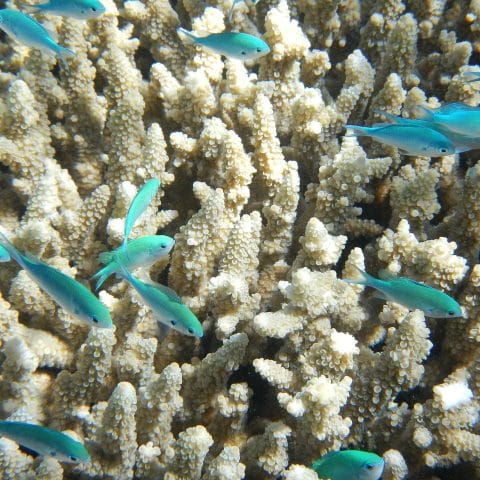
Aussi connu sous le nom de Grande Barrière de Corail, le récif compte parmi les icônes indétrônables du Queensland et, avec lui, de tout le pays. Vous projetez de partir en Australie ? LEC vous souffle ce qu’il faut retenir à son sujet.
Un site exceptionnel consacré par l’UNESCO
C’est au nord-est de la côte australienne que s’élève le plus grand ensemble corallien du monde. Inscrit sur la liste du patrimoine mondial de l’UNESCO depuis 1981, il offre selon l’organisation « un spectacle d’une variété et d’une beauté extraordinaires et d’un haut intérêt scientifique » à travers environ :
- 400 espèces de coraux
- 1 500 espèces de poissons
- 4 000 espèces de mollusques
Une merveille née il y a un demi-million d’années
La Grande Barrière s’étire sur plus de 2 000 km, et la quasi-totalité de son écosystème couvre une superficie de 348 000 km2, soit une surface semblable à celle de l’Allemagne ou de la République du Congo. Elle ne forme pas une muraille continue, mais elle consiste en une collection de récifs-barrières, de récifs frangeants et d’atolls. Paradis tropical, celles que les Anglophones appellent Great Barrier Reef aurait environ 500 000 ans d’âge. Elle est considérée comme l’une des sept merveilles de la nature, liste popularisée par la chaîne télévisée CNN, aux côtés du Grand Canyon, de l’Everest ou encore des chutes Victoria.
Qu’est-ce au juste que le corail ?
Avec les anémones de mer auxquelles ils sont apparentés, les coraux font partie des premiers animaux à avoir peuplé les mers. Parmi les centaines d’espèces aux formes multiples qui existent, beaucoup construisent des récifs. Les coraux sont des organismes rudimentaires constitués d’un squelette calcaire, ou polypier, sur lequel pousse la partie vivante, ou polype. Ces petits animaux fragiles ont peu évolué et sont aujourd’hui menacés dans de nombreuses régions du monde.