
The North Sea is an integral part of Britain’s identity. That is why, as part of your language study trip to England with LEC, that our organization has decided to tell you a little more about it today.
The North Sea and the English Channel: two epicontinental seas
Just like the English Channel, which LEC already told you about in a previous Did you know, the North Sea is what’s known as an epicontinental sea. Translation: it’s a part of the ocean (the Atlantic) that covers a continental shelf (Europe).
La mer du Nord et les nombreux pays qu’elle borde
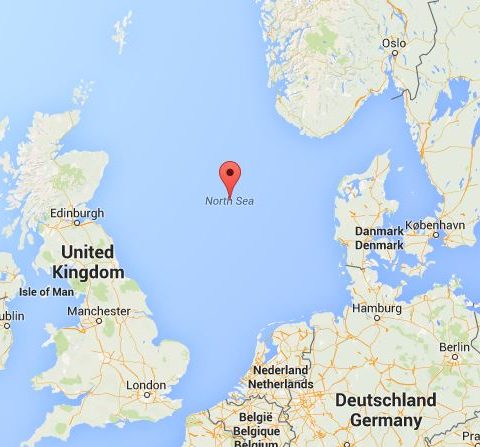
C’est peu dire que la mer du Nord a portée internationale : elle compte pas moins de sept nations parmi ses pays côtiers. Il s’agit de la France, de la Belgique et des Pays-Bas, de l’Allemagne, de la Norvège et du Danemark, sans oublier le Royaume-Uni, que vous aurez tout loisir de découvrir au cours d’un séjour linguistique en Angleterre avec LEC ou d’un voyage linguistique en Ecosse.
A sea bounded by three points
The North Sea covers the northwestern part of Europe, spanning approximately 575,000 km². It is bounded by three points:
- the Strait of Dover, the strait separating Great Britain from continental Europe
- the Shetland Islands, a British archipelago located northeast of Scotland
- the Skagerrak, a strait located between Norway, Sweden, and Denmark
Iconic cities on the estuaries of the North Sea
La mer du Nord, chantée par Jacques Brel dans Le Plat pays, c’est enfin nombre de grands ports et villes emblématiques bordés par ses eaux – dont vous pourriez avoir l’occasion de visiter quelques-uns lors d’un séjour linguistique en Angleterre, en Allemagne ou en Ecosse. Des exemples ? Citons Hambourg, Felixstowe, Edimbourg, sans oublier Londres !