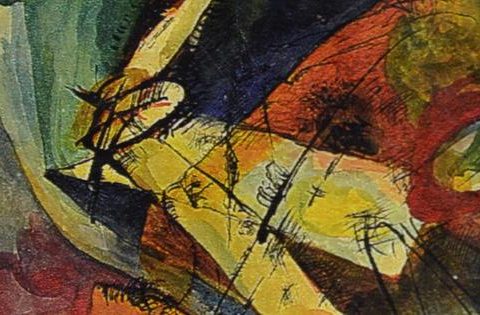
LEC aimerait aujourd’hui s’arrêter sur un mouvement culturel de premier plan sur l’échelle européenne, une tendance artistique que l’on se doit de connaitre un tant soit peu – à défaut d’être incollable sur le sujet ! – avant de partir en séjour linguistique en Allemagne : l’expressionnisme.
Un art aux influences multiples pendant son séjour linguistique
Un séjour linguistique en Allemagne sera l’occasion de découvrir un pays où la situation de la peinture au début du 20ème siècle ne pouvait qu’accueillir un mouvement de très grande ampleur. Défini comme l’expression de la vision émotionnelle et subjective du monde telle que ressentie par l’artiste, l’expressionnisme s’illustre à travers la peinture, la littérature ou bien encore le cinéma.
Un séjour linguistique pour découvrir les œuvre du Brücke et du Blaue Reiter
L’expressionnisme allemand, que le régime nazi qualifiera pendant son règne d’ « art dégénéré », mélange traditions nationales et innovations extérieures – citons, ici, l’influence notable de peintres comme Gauguin, Cézanne ou Lautrec. Pendant son séjour linguistique en Allemagne, on entendra peut-être parler des deux mouvements à avoir le plus durablement marqué l’expressionnisme outre-Rhin : Die Brücke (« Le pont ») et Der Blaue Reiter (« Le cavalier bleu »).
Une influence colossale au début du 20ème siècle
Né en 1905 dans la Saxe, Die Brücke entremêle habilement tradition graphique médiévale et plastique africaine et océanienne. Citons, parmi ses plus fameux représentants, Otto Mueller ou Emil Nolde.
Un séjour linguistique en Allemagne sera peut-être l’occasion d’entendre également parler du Blaue Reiter, second mouvement d’importance, représenté par Kandinsky, où l’animal et l’humain ont tour à tour un rôle prépondérant à jouer.