

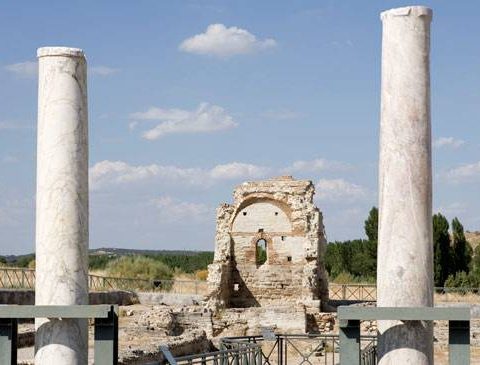
L’expression d’Hispanie romaine relèverait presque du pléonasme, étant donné que ce sont les Romains eux-mêmes qui ont baptisé de cette façon la péninsule Ibérique. Que cela ne nous empêche pas, toutefois, de s’attarder quelques minutes sur le sujet. Après tout, une page d’Histoire ne peut pas faire de mal avant votre prochain voyage linguistique ado en Espagne avec LEC !
L’Hispania Romana ou la domination de Rome
L’Hispanie romaine, que l’on appellera Hispania Romana lors de son prochain voyage linguistique ado en Espagne, est l’expression qui vient désigner l’ensemble des territoires contrôlés en péninsule Ibérique (ou península ibérica) par la République romaine, puis par l’Empire romain, du 2e siècle avant J.-C. environ et jusqu’au 5e siècle de notre ère.
Rome en guerre contre Carthage
Si les Romains décident d’investir cette péninsule Ibérique qui, vue de l’autre côté de la mer Méditerranée, semble bien loin, c’est d’abord pour en chasser les Carthaginois au cours de la Deuxième Guerre punique, conflit qui aura vu l’affrontement des célèbres Scipion l’Africain et d’Hannibal Barca.
Une lutte pour le contrôle total de la péninsule Ibérique s’engage
S’engage alors pour les Romains, et pendant près de deux siècles, une lutte pour le contrôle total de la péninsule Ibérique. Celle-ci finira par voir le peuple de Rome victorieux, au dépend des Cantabres et des Astures qui, aujourd’hui, vivent encore grâce à la Cantabrie et aux Asturies, deux communautés autonomes dont vous croiserez peut-être le chemin lors d’un prochain voyage linguistique ado en Espagne.
Des noms indissociables de l’Hispanie romaine
De sa naissance à sa disparition, l’Hispanie romaine aura vu surgir des noms passés, depuis, à la postérité. Citons, par exemple, Trajan, le premier empereur issu de la péninsule Ibérique, mais également Hadrien, célèbre pour le mur éponyme qu’il a fait ériger en Grande-Bretagne. L’Hispanie romaine aura également été le berceau de philosophes de renom, à l’instar de Sénèque, conseiller à la cour impériale sous Caligula et précepteur de Néron.