

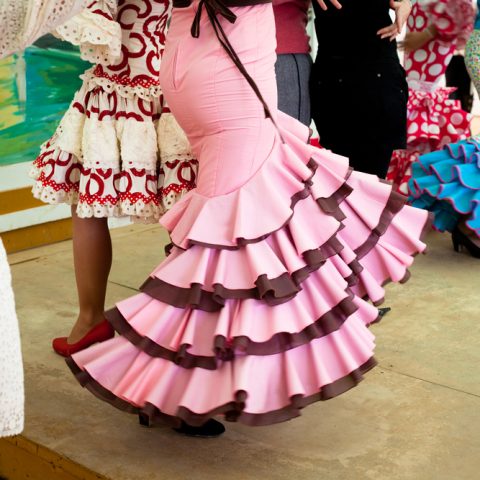
À l’occasion de votre voyage linguistique en Espagne, LEC se sentait d’humeur à vous parler du flamenco. En piste !
L’Andalousie pour votre voyage linguistique en Espagne ?
Mot espagnol à l’étymologie discutée – certains spécialistes pensent qu’il vient d’un nom commun signifiant flamant, quand d’autres arguent qu’il est issu de flamme –, le flamenco est le nom donné aux chants et danses populaires d’Andalousie, région mythique dans laquelle vous aurez peut-être la chance de séjourner pendant votre voyage linguistique en Espagne.
Les influences diverses et variées du flamenco
Demandez à un amoureux du flamenco de vous parler des origines de cet art, et ils les fera remonter à la préhistoire ; se sont ajoutées à celles-ci des influences en provenance de l’émigration sumérienne, puis des mélopées arabes, de la musique juive, sans oublier des gitans. Eclectique, le flamenco ? C’est le moins que l’on puisse dire !
Chanteur, danseur et guitariste
Ce genre traditionnel, fruit exquis de la fusion d’éléments gitans et du folklore andalou, est parvenu à se propager dans toute l’Espagne. Trois acteurs communiquent leur fougue à travers le flamenco :
- le chanteur (cantaor)
- le danseur (bailarín)
- le guitariste (tocaor)
Le flamenco chanté…
Le flamenco en tant que chant peut se catégoriser aisément :
- le cante jondo, ou chant profond
- le cante grande, ou grand chant
- le cante chico, ou petit chant
… et le flamenco dansé
La danse, elle, est accompagnée par la voix humaine. Si vous ne deviez retenir qu’un mot de votre séjour linguistique en Espagne à propos du flamenco, souvenez-vous de celui-là : le duende – il s’agit du démon de l’inspiration qui anime le danseur !